History
History of the Koszalin Narrow Gauge Railway 1898-2001
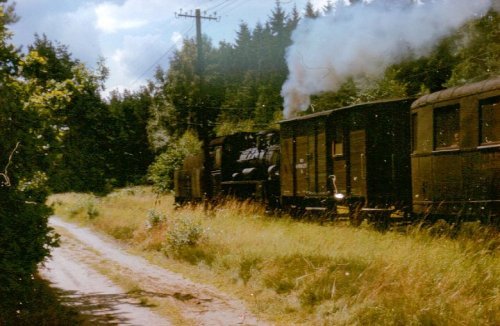
The need to build a railway of local importance in the Koszalin County arose during Prussian rule. Poor-quality dirt roads created increasing transportation problems and seriously hampered the operations of numerous brickyards, distilleries, farms, and small and medium-sized enterprises. According to economic analysts of the time, a railway could ensure the free supply of materials needed for production and the distribution of manufactured goods. It would also transport workers and provide connections between parts of the Koszalin County and the “rest of the world.” All of this created an opportunity for the region’s economic revitalization. The decision to build a narrow-gauge railway in Koszalin was made in 1897, but the concession and building permit were not issued until May 24, 1898. For cost-saving reasons, a 750 mm track gauge was chosen, different from the gauge used by other railways in Western Pomerania. On May 24, 1898, the same day the concession for the construction and operation of the Koszalin Narrow Gauge Railway was issued, the Koszalin-Nacław Narrow Gauge Railway Joint-Stock Company was established. It was owned by the Koszalin County, the Krauss-Maffei steam locomotive factory from Munich, and its shareholders. The Krauss-Maffei factory supplied the materials necessary for the railway’s construction (sleepers, rails, etc.) and later the rolling stock (steam locomotives). On November 1 of that year, service began on the Koszalin-Manowo-Nacław section (32 km), and the Nacław-Jacinki section (7 km) was leased from the Sławno County Railway. Good transport results encouraged the company to expand the railway network.
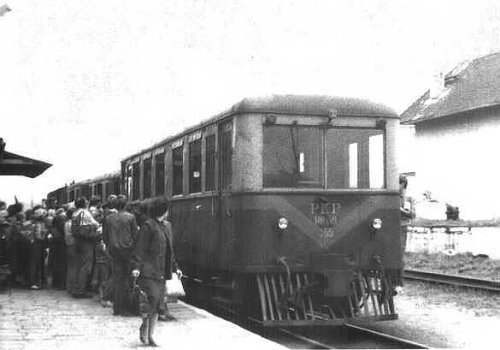
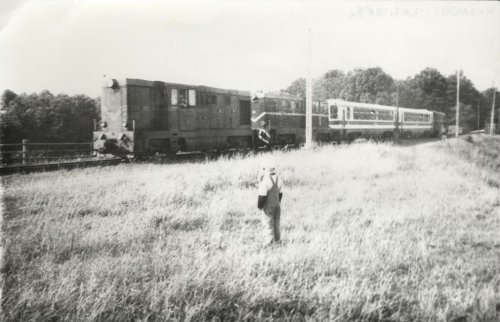
On November 1, 1905, the Manowo-Świelino-Bobolice section (34 km) was opened, and on November 2, the Świelino-Białogard section (32 km). After the Białogard and Bobolice counties joined the company, it was decided to change the company’s name to the Joint-Stock Company of the United Narrow-Gauge Railways of Koszalin, Bobolice, and Białogard Counties. On September 16, 1909, the newly constructed Białogard-Rarwino section (20 km) was opened. To enable residents of the entire region (including those from the most remote villages) to use the railway, car bus service was launched in 1927. In 1932, as a result of administrative reform in Germany, the Bobolice county was liquidated. The railway changed its name to the Koszalińsko-Białogardzka Kolej Wąskotorowa Spółka Akcyjna (Koszalin-Białogard Narrow-Gauge Railway Joint-Stock Company). Two years later, because the Sławno Railway had rebuilt the Sławno-Jacinki-Polanów Pomorskie section (43 km) from 750 mm to 1,435 mm (standard gauge), the Jacinki-Polanów Pomorskie-Żydowo section (15 km) was leased from the Sławno County Railway, and a three-rail splice was used on the Jacinki-Polanów Pomorskie route. This allowed both standard-gauge and narrow-gauge trains to run on them. In 1945, the Red Army dismantled almost all of the tracks and deported all the rolling stock (approximately 200 wagons and locomotives) to the USSR. Only the Świelino-Białogard section survived. On May 1, 1945, all railway lines were taken over by the Polish State Railways. A year later, likely under pressure from the military, which planned the construction of an airport in Zegrze Pomorskie, the decision was made to rebuild the Koszalin narrow-gauge railway. The narrow-gauge railway was intended to initially transport materials necessary for the airport’s construction, and then fuel for aircraft and heating.
The work lasted two years, and on July 1, 1948, the Koszalin Narrow Gauge Railway was officially opened. These included the 17-kilometer Bobolice-Świelino line, the 32-kilometer Świelino-Białogard line, and the 29-kilometer Świelino-Koszalin line. After the tracks were rebuilt to Kurozwęcz, construction began on a large station (the third largest on the Koszalin Narrow Gauge Railway) and a 5-kilometer siding to the airport. Drivers from the Poznań Narrow Gauge Railway were assigned to operate the Koszalin Narrow Gauge Railway. The reconstruction of the Koszalin Narrow Gauge Railway was completed in July 1952, when service resumed on the 30-kilometer Białogard-Rarwino-Lepino-Sławoborze line, rebuilt in 1950-52. Furthermore, all sections constructed before the war were reopened, except for the 42-kilometer Manowo-Polanów Pomorski-Żydowo line. A new section, Rarwino-Lepino, which had not existed until 1945, was also built. Although only 6 km long, it was crucial for the efficient operation of narrow-gauge railways throughout Pomerania. This short section made it possible to travel by narrow-gauge train from Koszalin to Kołobrzeg and on to Stargard Szczeciński, and even to the Szczecin Lagoon, to the town of Stepnica. The track, located between Rarwino and Lepino, connected the Koszalin Narrow-Gauge Railway with the Kołobrzeg Narrow-Gauge Railway and the other narrow-gauge railways in the western part of the region. After the merger of all narrow-gauge railways in Pomerania on May 1, 1949, the two railway authorities in Gryfice and Stargard Szczeciński were abolished (no such authority was established in Koszalin) and given the common name Pomeranian Commuter Railways (PKD).
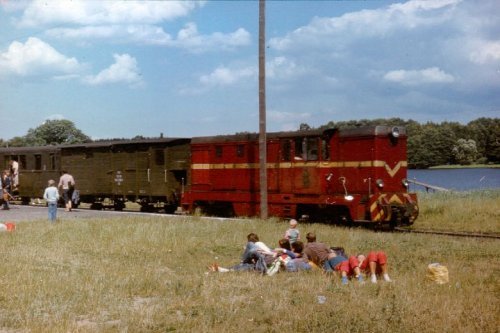
The highest passenger traffic on the Koszalin narrow-gauge railway, reaching 500,000 passengers and 200,000 tons of goods, was recorded in the 1950s. However, in subsequent years, traffic levels declined significantly. The lowest levels were recorded in the 1990s. This marked the beginning of a gradual cessation of passenger train traffic on individual sections. In 1984, the Świelino-Bobolice line (16 km) was closed. In 1991, following the derailment of a freight train caused by the poor technical condition of the tracks, freight transport on the Białogard-Sławoborze line was suspended. At the turn of the 1980s and 1990s, the previously unified PKD network fragmented into three separate railways: Koszalin KD, based in Koszalin; Gryfice KD, based in Gryfice; and Stargard KD, based in Stargard Szczeciński. In 1992, passenger services on the Białogard-Sławoborze route (30 km) were suspended, and the Białogard locomotive shed was closed. On September 30, 1996, the Świelino-Białogard section (32 km) was also closed. From 2001, the Koszalin-Świelino line (30 km) was shortened by 10 km, and the railway reached its terminus in Rosnowo only during the summer holidays. On September 17, 2001, a freight train to the airport in Zegrze Pomorskie departed on its final route, and on September 22, service on the Świelino-Koszalin section ceased. The Koszalin Narrow Gauge Railway was finally closed on October 1, 2001. Four years later, on November 7, 2005, our Koszalin Narrow Gauge Railway Association was registered at the District Court in Koszalin.
History of the Koszalin Narrow Gauge Railway after 2005 r.
The Koszalin Narrow Gauge Railway Society was established and registered on November 7, 2005, by order of the District Court in Koszalin, Division IX of the National Court Register, under its then name, the Koszalin Narrow Gauge Railway Society (based in Koszalin). Our primary goal was to save the Koszalin Narrow Gauge Railway from destruction and bring it back into operation. Built in 1898, it is not only a legally protected monument but, above all, a piece of technical heritage. We believed that the Koszalin Narrow Gauge Railway would once again become a popular means of transport in the region, serving its residents. Above all, however, it has become, to our delight, a major tourist attraction – as have other such railways in Poland and abroad. Therefore, we want it to become one of the elements of a larger program called The “Northern Trail,” which should encompass the major tourist attractions of the commune and its surrounding areas (educational and hiking trails, nature and historical reserves, monuments, viewpoints, recreation areas, bicycle routes, etc.), could be used by tourists as an attraction in itself or as a means of transportation to explore the region.
In the fall of 2005, members of our Society began volunteer work at the narrow-gauge locomotive shed in Koszalin on Kolejowa Street and on the railway line to Rosnów. The first two years of the Society’s operation focused on securing the dilapidated locomotive shed and clearing the railway line between Koszalin and Manowo. A breakthrough year for the Society was 2008. Power was connected to the locomotive shed, and an electronic property security system and other necessary utilities were installed. That same year, in May, the first transport of rolling stock from Dobra Nowogardzka to Koszalin took place. A MBxd2-307 motor car was brought in. The entire operation took over 24 hours.
In June 2008, our association organized its first family festival. Visitors to the locomotive shed could tour it and even take a ride on a handcar. There was no shortage of people interested. The Koszalin Band added to the atmosphere. Since then, we have regularly participated in organizing events in the Night of Museums series.
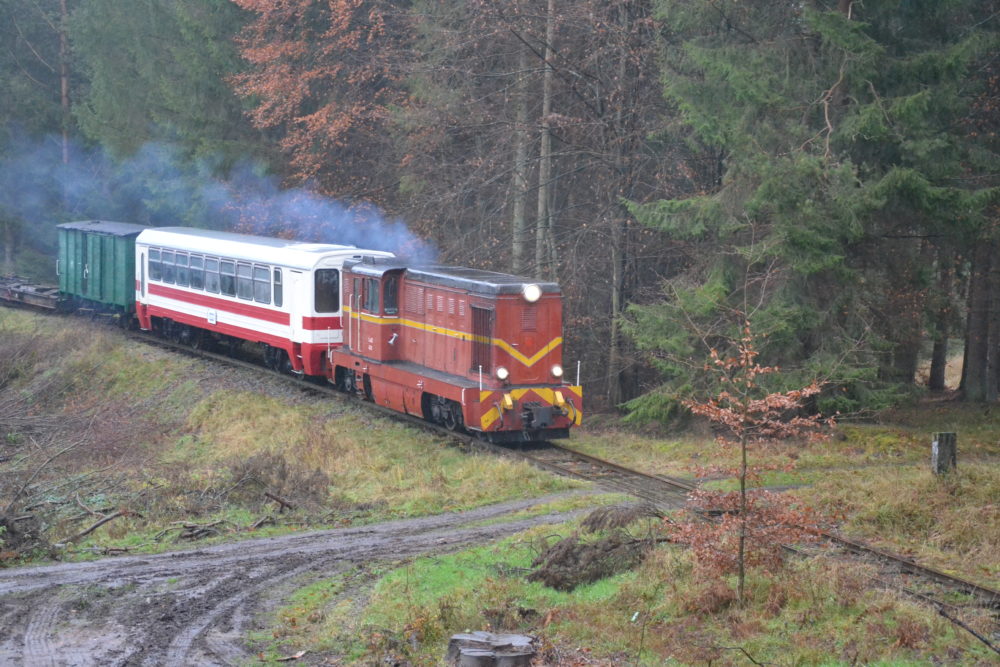
After the motor car was repaired, maintenance operations could resume, aiming to restore the Koszalin Narrow Gauge – Bonin line to operational condition. On September 13, 2008, the first festival was held at Bonin station, and a week later, the train entered Manowo station for the first time in five years. However, our most important goal was the reconstruction of the track to Rosnowo. In early 2009, preparations began for the reconstruction of the six-kilometer Manowo-Rosnowo section, which was completed in 2016. In the meantime, we brought the second part of the rolling stock to Koszalin. This time, it included an Lxd2 locomotive, a BTxhi dining car, a Bxhpi passenger car, a summer car, and two brankards. On March 29, 2016, the company adopted its current name.
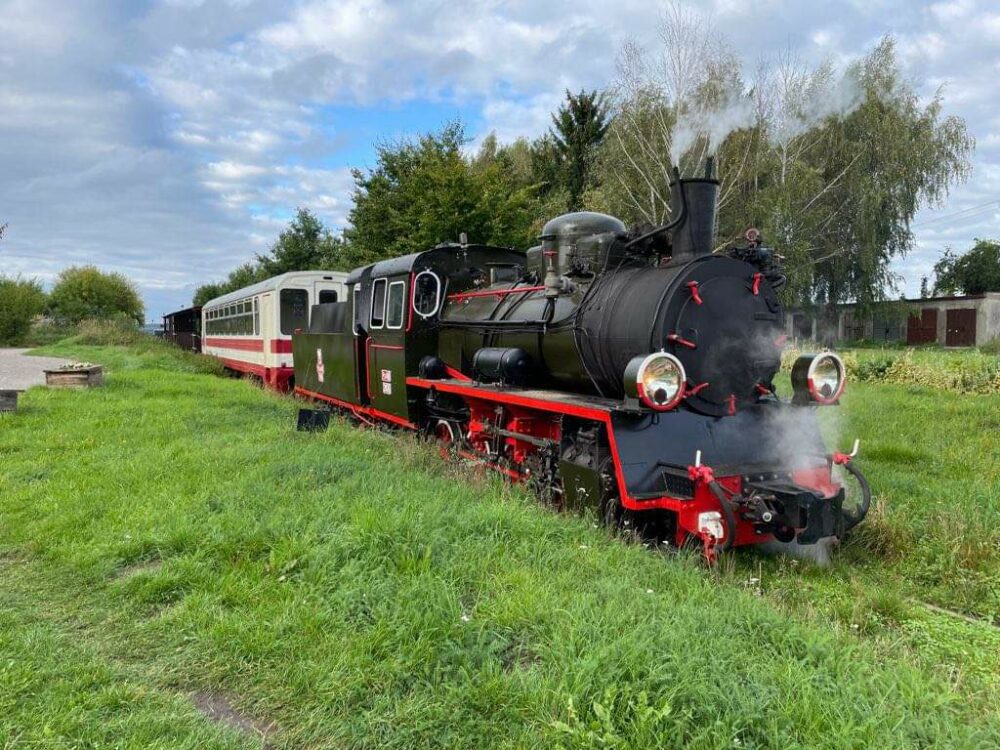
In 2021, the Koszalin Narrow Gauge Railway marked a significant milestone with the return of steam traction after more than a quarter of a century. Following repairs carried out in the Koszalin Narrow Gauge Railway workshops, the Px48-3901 steam locomotive was launched on the Rosnów line.
Our Society is an organization open to people and good ideas. Anyone interested in collaborating with us (participating in projects, sponsoring, assisting in obtaining tools and equipment, etc.) can contact Society members via our website, Instagram, Facebook, email, or directly.